Pediatric Eye Exams at Lowcountry Eye Care: Parent Q&A
Below, we answer the questions we hear most often in the office about children’s eye exams.
When should I schedule my child’s first eye exam?
At Lowcountry Eye Care, we follow the American Optometric Association guidelines. We recommend:
- First exam: Between 6 and 12 months old
- Next visit: Around age 3
- Before school: Around age 5
- After that: Yearly exams (or more often if needed)
We offer that very first infant eye exam at no cost to you through a national program, so there is no financial barrier to getting your baby’s eyes checked early.
If we find anything that needs to be watched more closely, we will recommend follow-up visits sooner to monitor your child’s vision and eye health.
Do you offer free eye exams for infants?
Yes. We are proud to participate in a national no cost infant eye exam program for babies between 6 and 12 months old.
This visit is:
- A comprehensive eye health check for your baby
- Performed by our optometrists with tools designed for infants
- Free of charge for eligible age ranges
It is a great way to catch potential issues early, before your child can tell you something feels off.
How does Lowcountry Eye Care examine toddlers and preschoolers?
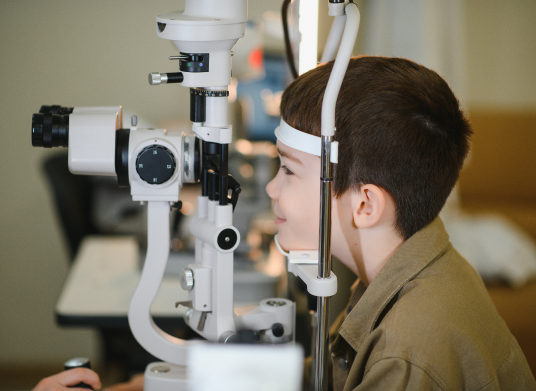
We structure toddler and preschool eye exams to feel like a game, not a test.
During your child’s visit, we:
- Use kid friendly eye charts with pictures instead of letters or numbers
- Perform a full comprehensive exam similar to an adult exam
- Check the outside health of the eye, including lids and cornea
- Check the inside health of the eye, including retina and optic nerve
- Use special instruments and optometric techniques to estimate their prescription, even if they cannot answer “Is 1 or 2 better?”
Your child does not need to know letters, numbers, or shapes to get a high quality exam.
What are the signs that my child might need glasses?
Some kids will tell you they cannot see clearly. Others adapt quietly and struggle in school or sports without realizing vision is the problem.
Common signs your child may need glasses include:
- Squinting to see far away objects
- Moving closer to the TV, books, or the classroom board
- Saying they cannot see leaves on trees or planes in the sky
- Rubbing their eyes frequently
- Complaining of headaches or eyes that feel tired
- A drop in grades or trouble keeping up in class
- Having a hard time seeing or following the board at school
If you notice any of these signs, it is a good time to schedule an eye exam.
Are pediatric eye exams covered by insurance?
In most cases, yes.
For many families, pediatric eye exams are covered similarly to adult eye exams. Typically:
- There is a copay at the time of the visit
- The rest of the exam is covered by your plan, depending on your benefits
If you are not sure how your insurance handles children’s vision care, our team is happy to help you check your benefits before you come in.
How can I prepare my child for their first eye exam?
A little preparation goes a long way in helping kids feel comfortable.
Here are some parent tested strategies we recommend:
- Model the experience: Schedule an eye exam for yourself first and bring your child along so they can see how it works. Some parents like to schedule back to back appointments so we examine the parent first, then the child.
- Talk it through in simple terms: Explain that the doctor will look at their eyes with lights and pictures and may ask them to look at fun shapes or images. Emphasize that nothing will hurt and there are no shots.
- Reassure them about “eye poking” and scary machines: One of the most common questions kids ask is, “Are you going to poke me in the eye?” You can confidently tell them that we do not poke eyes or give eye shots.
- Good news for nervous kids and adults: We no longer use the old air puff test at our offices, so there is no surprise blast of air to worry about.
We keep the environment relaxed and friendly so kids can stay at ease while we gather all the information we need.
Can I schedule eye exams for multiple children at the same time?
Yes.
To help busy families, we can schedule up to three family members in a block so you do not have to make multiple trips.
We have found that more than three at once can get a little chaotic in the exam rooms, so we cap it there to keep everyone’s experience smooth and stress free.
Do you offer after school or weekend appointments for kids?
We do not currently offer weekend appointments, but we do offer after school appointments and often reserve those slots for kids.
This helps your child avoid missing a full day of school for their eye exam.
Do you test for lazy eye and color blindness in kids?
Yes. These are standard parts of our pediatric eye exams.
We screen for:
- Color vision deficiencies, often called color blindness
- Lazy eye, also known as amblyopia, and related issues such as eye turns or misalignment
Detecting these conditions early is important. With prompt treatment, we have a better chance of improving vision and helping your child see and learn as well as possible.
Are there glasses for active kids who play sports?
Yes. We offer a wide range of kid friendly, active lifestyle options, including:
- Everyday frames for kids who are not very rough on their glasses
- Frames with spring hinges that can open up to 180 degrees, which are great for kids who might take a ball to the face or drop their glasses
- Sport specific safety eyewear designed to meet safety standards for sports and protect against impact related eye injuries
Whether your child is on the playground, the field, or the court, we can help you choose frames that keep up with their lifestyle.
Will my child need their eyes dilated?
Sometimes yes, but not always.
Dilation helps us:
- Get a more detailed look at the back of the eye
- More accurately measure prescriptions in children
We will let you know if dilation is recommended for your child’s specific situation. When dilation is needed, we will work with you to:
- Choose a day and time that fits your schedule
- Avoid interfering with important school days or sporting events whenever possible
When is the best time of day to schedule a young child’s eye exam?
For children under age 5 or kids who are not yet in school, we recommend morning appointments when possible.
In the morning, kids are more likely to be:
- Well rested
- Fed
- More cooperative and focused
Afternoon appointments can be trickier for little ones who are tired or done with the day, so mornings tend to make the process easier on everyone.
Do you offer myopia management for children?
Yes. Myopia, or nearsightedness, management is a growing focus in pediatric eye care, and we are proud to offer options to help slow down the progression of nearsightedness in kids.
Our myopia management options may include:
- Specially designed soft contact lenses for myopia control
- Prescription eye drops that can help reduce the rate of myopia progression
- Stellest eyeglass lenses as a treatment option for myopia management
“We also offer Stellest™ eyeglass lenses as a treatment option designed to help manage myopia progression in children.”
If your child is becoming more nearsighted from year to year, we can discuss whether myopia management is a good fit for them.
When can my child start wearing contact lenses?
We love contact lenses for the right kids, and there is no strict age rule.
Instead, we look at:
- How responsible your child is
- Whether they can wash their hands properly
- Whether they can put contacts in and take them out safely
- Their ability to follow instructions and care for lenses as directed
We have successfully fit children as young as 8 years old in contact lenses, but for many kids the average starting age is closer to 11 to 13 years old.
We will talk with you and your child together to decide what makes sense.
Ready to schedule your child’s eye exam?
Whether it is your baby’s first no cost infant eye exam or your teen’s first contact lens fitting, we are here to make it easy, relaxed, and kid friendly.
To schedule, call Lowcountry Eye Care or book online to reserve your child’s pediatric eye exam. Be sure to ask about our free infant eye exam program for babies 6 to 12 months old.